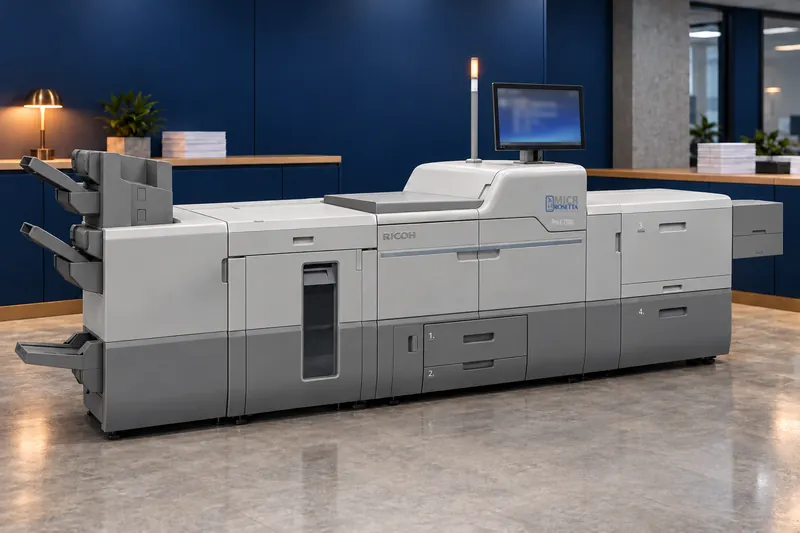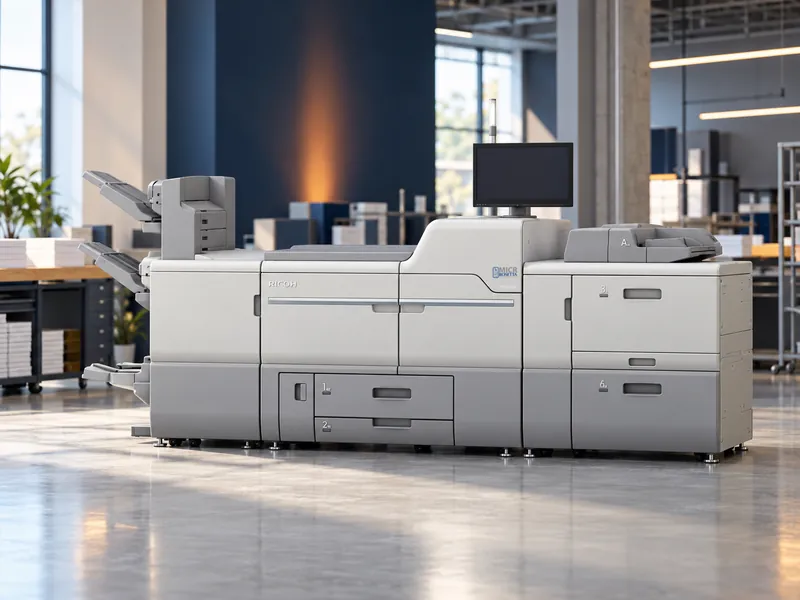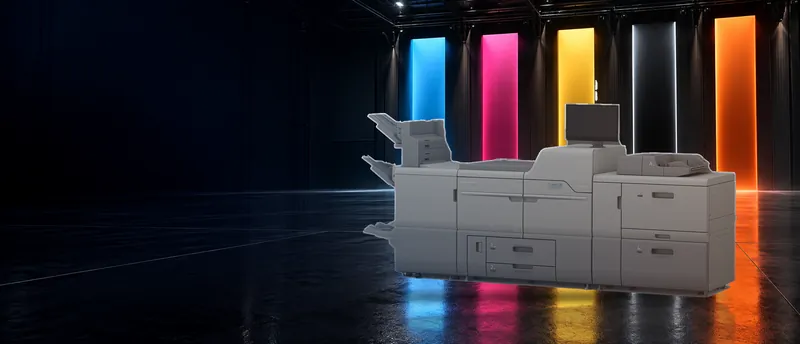
A Rosetta Technologies Pro C7500PM five-color MICR printer in a dark production hall, five tall bars of cyan, magenta, yellow, black and ember light behind it
MICR check printing

MICR check printers, check printing software, and MICR toner from one vendor

We build the printer, write the software and formulate the toner, so one company answers for every character on the MICR line.

  • ANSI X9.100-20 and ABA compliant
  • MICR Performance Guarantee
  • 24/7 technical support
Pro C7500PM Five-color MICR printer 95 ppm with the speed upgrade, 2400 x 4800 dpi
0.1%

ProMark MICR toner reject rate or lower, independently tested on an IBM 3890 high-speed reader/sorter.

Shown: Pro C7500PM five-color MICR printer
0.1% ProMark MICR toner reject rate, or lower
2% to 4% Typical MICR toner reject rate across the industry
136 Pages per minute at the top of the line, from 34 ppm at the desktop
39 Years working in magnetic ink character recognition
Printers, software, supplies

Three parts of one check print path, from one vendor

Finance and operations teams usually assemble check printing from three suppliers: a printer vendor, a software vendor, and whoever sells the toner. We supply all three, which is what makes the MICR Performance Guarantee possible at all.

MICR printers

Ricoh print engines re-engineered into MICR-capable hardware, from a Ricoh P 311 for a single payroll department to a Ricoh Pro 8420 running 136 pages per minute. Every product page names its engine.

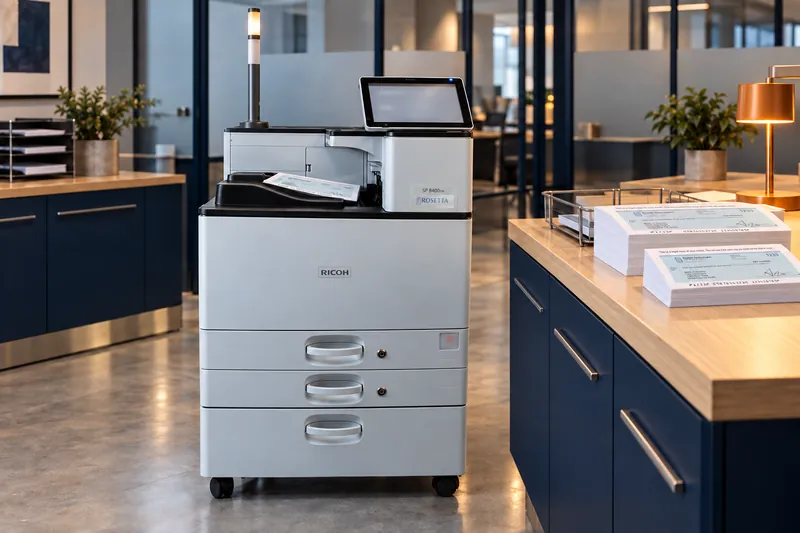
  • Workgroup class: P 311M, P 501M, SP 8400DNM, SP C840DNM, IP C8500M
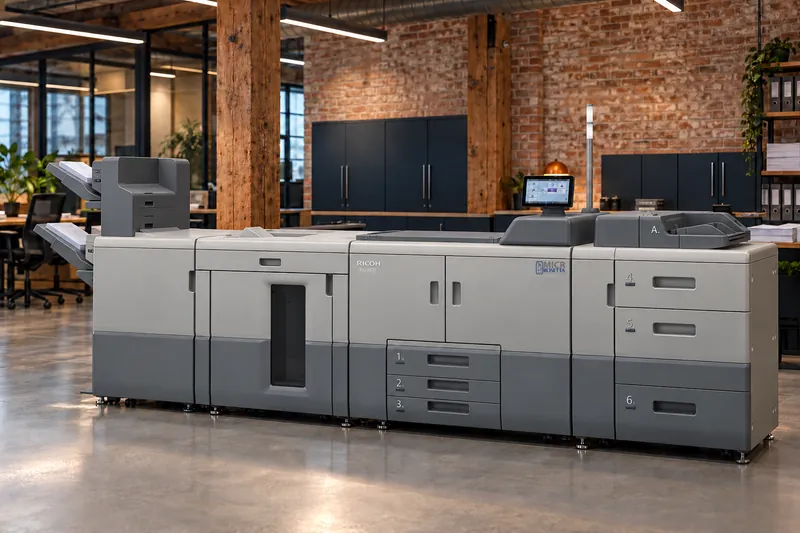
  • Production class: Pro C7500PM, Pro 8410M/8420M, Pro C7210XM
  • Adobe PostScript 3 compatible
See the printer line

Check printing and returns software

Print checks on demand across a single device or a networked environment, and process return items and Image Replacement Documents without adding a second vendor.

  • CheckStream check printing
  • OnSight returns processing, PDF and X9.37
  • Rosetta Print Manager for networked print estates
See the software

ProMark MICR toner and supplies

The first polyester-based MICR toner in the industry. A polyester base holds together and tolerates heat better than the polystyrene base most MICR toner still uses, which is where the reject-rate difference comes from.

  • ProMark MICR toner and ink
  • Maintenance kits and service plans
  • Check and IRD stock
See supplies
Why the reject rate matters

A rejected check is a bank fee, not a reprint

When a reader/sorter cannot read the magnetic line on a check, the item is rejected and handled by exception. Banks charge for items over their acceptable reject rate. The toner is what decides how often that happens.

  • Tested on the machine that judges it

    The 0.1% figure comes from independent testing on an IBM 3890 high-speed reader/sorter, which is the class of machine that decides whether a check clears or gets kicked out.

  • A polyester base, not polystyrene

    ProMark MICR toner is the first polyester-based MICR toner in the industry. It holds together under heat and handling, so the magnetic signal on the line survives the trip through a sorter.

  • One vendor for the whole print path

    The printer, the software, and the toner all come from us. When MICR quality is in question, there is no argument between three suppliers about whose part caused it.

MICR toner reject rate

Lower is better. Rejected items are handled by exception and billed by the bank.

ProMark MICR toner 0.1% or lower
Typical MICR toner 2% to 4%
Bars are scaled to the top of the industry-typical range. ProMark MICR toner independently tested on an IBM 3890 high-speed reader/sorter.

Why a reject rate is a cost rather than a quality score

  1. A weak MICR signal

    A worn fuser, the wrong toner, or paper outside the specification.

  2. The bank rejects the item

    The reader/sorter cannot read it magnetically.

  3. Exception handling

    The item is processed by hand at the bank.

  4. A bank fee

    Charged on rejects above the rate your bank accepts.

The toner is the first link in that chain

ProMark MICR toner tests at a 0.1 percent reject rate or lower. The industry-typical range is 2 to 4 percent.

ProMark MICR toner independently tested on an IBM 3890 high-speed reader/sorter.

MICR printers

From a desktop unit to 136 pages per minute

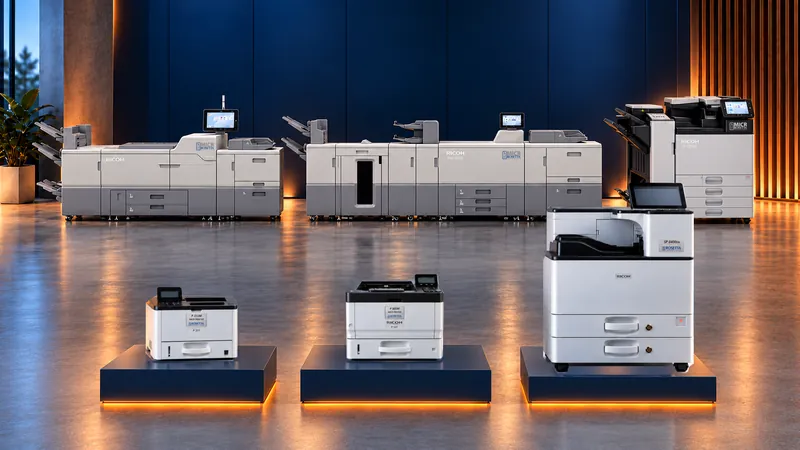
We re-engineer proven Ricoh print engines into MICR-capable hardware rather than building proprietary printers from scratch. The desktop P 311M is built on a Ricoh P 311 and the production Pro 8410M / 8420M on a Ricoh Pro 8420. The engine is a machine your service organization already supports. The MICR path is what we build.

The Rosetta Technologies MICR printer line on low plinths: the P 311M, P 501M and SP 8400DNM in front, and the Pro C7500PM, Pro 8420M and IP C8500M behind
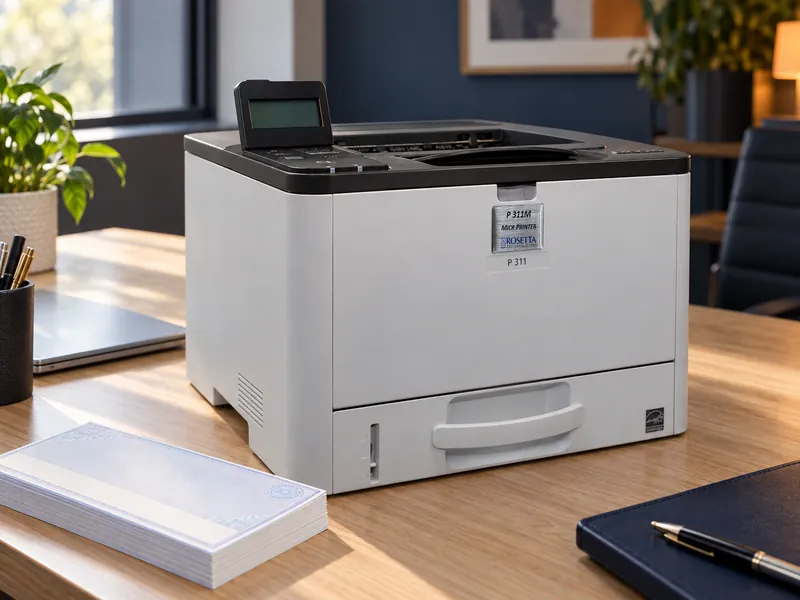
The P 311M desktop MICR printer on an office desk beside a stack of blank check stock
Workgroup

P 311M Desktop MICR Printer

  • ClassDesktop
  • UseSingle department
  • OutputMonochrome MICR
Specifications
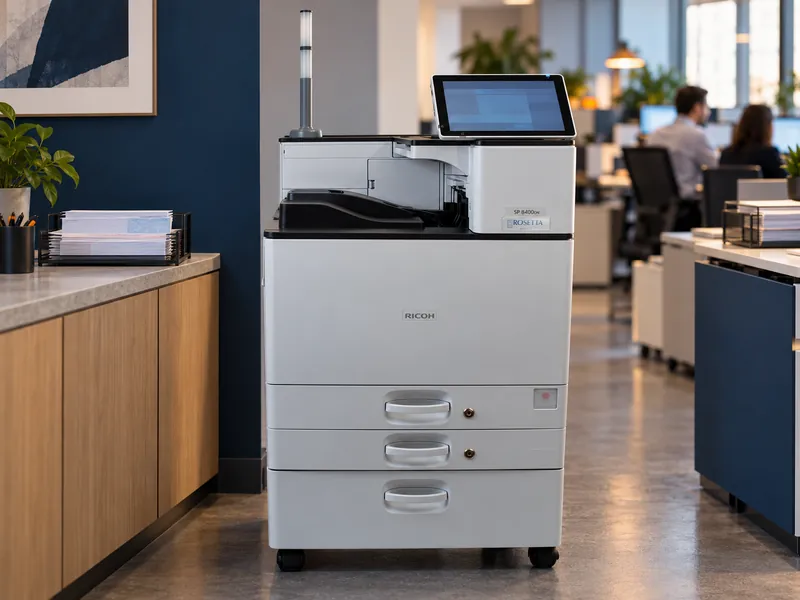
The SP 8400DNM workgroup MICR printer in a busy finance office
Workgroup

SP 8400DNM MICR Printer

  • ClassWorkgroup
  • UseShared finance team
  • OutputMonochrome MICR
Specifications
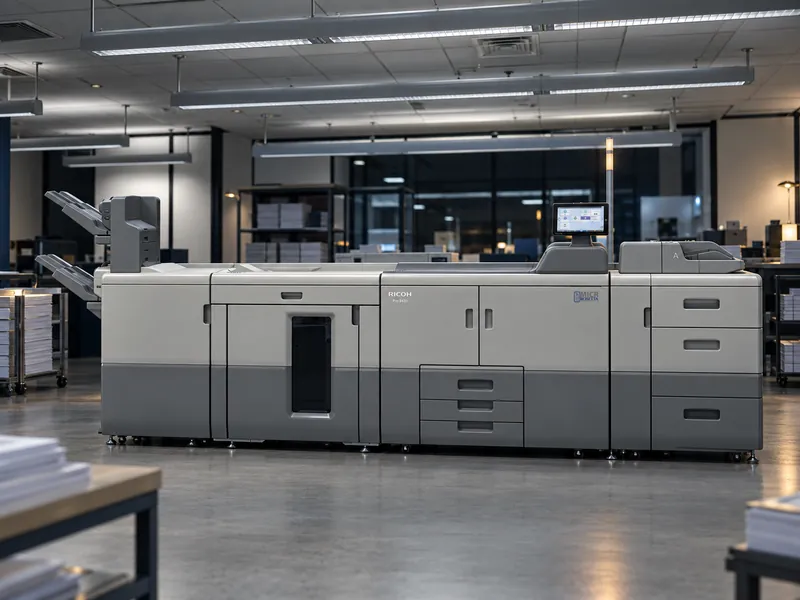
The Pro 8410M production MICR system on a bank operations print floor
Production

Pro 8410M / 8420M MICR Printer

  • ClassProduction
  • UseHigh volume
  • OutputMonochrome MICR
Specifications
The Pro C7500PM five-color MICR printer on a production floor, full length in view
Production

Pro C7500PM 5-Color MICR Printer

  • ClassProduction
  • UseHigh volume
  • Output5-color plus MICR
Specifications
Magnetic ink character recognition

What MICR is, in plain terms

Most people meet MICR without knowing its name. It is the row of angular characters along the bottom of every check.

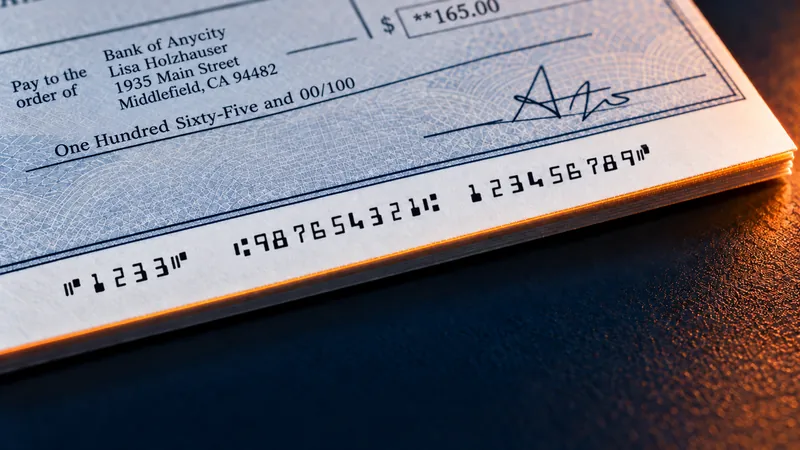
Close-up of the lower half of a printed check, its E-13B MICR line lit by a thin line of ember light
The MICR line on our demo check, read left to right: check number, routing number, and account number, printed in E-13B characters with magnetic toner.

What is MICR?

MICR stands for magnetic ink character recognition. It is a technology that prints characters in magnetic ink or toner so a machine can read them by their magnetic signal rather than by their shape. Banks use it to sort and clear checks at high speed.

What is the MICR line on a check?

The MICR line is the row of characters printed along the bottom edge of a check. It carries the bank routing number, the account number, and the check number, printed in the E-13B character set. A reader/sorter at the bank reads that line magnetically to route the item.

What makes a MICR check different from a regular printed check?

A MICR check has its MICR line printed with magnetic toner on a printer calibrated for MICR output. A check printed on an ordinary office printer with ordinary toner looks similar to a person but carries no usable magnetic signal, so a reader/sorter rejects it and the item is handled by hand.

Why do checks get rejected by a bank reader/sorter?

A reader/sorter rejects an item when the magnetic signal on the MICR line is too weak, too strong, or misshapen. Common causes are non-MICR toner, a printer that is out of calibration, worn fuser components, or paper that is not designed for the process. Banks charge for rejected items over their acceptable rate.

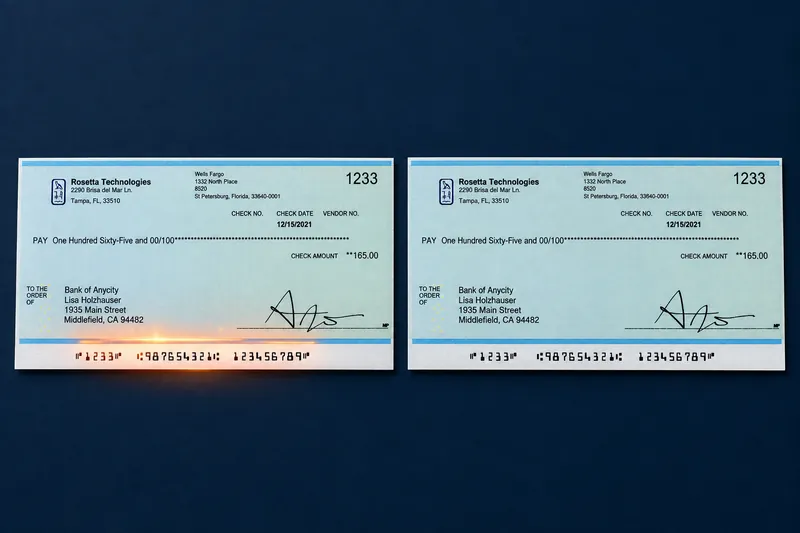
Two checks that look identical side by side on a navy surface, a line of ember light along the MICR line of only the left one

What makes a printer a MICR printer

  1. Magnetic tonerIron oxide gives the characters a magnetic signature.
  2. CalibrationProduction verified on a MICR verifier before it ships.
  3. Certified fontsE-13B or CMC-7, tuned to the engine and the toner.

All three present, and the item clears. The reader/sorter reads the line. With only the toner, the check looks right to a person and is rejected by the machine.

The most expensive mistake in this category is assuming MICR is a supply rather than a system.

The MICR Performance Guarantee

If your bank reports a MICR quality problem, we investigate it. Where the problem is verified as caused by our materials or modifications and cannot be resolved, we reimburse the fees your bank charges for rejected checks over their acceptable rate.

Applies to Rosetta Technologies branded Ricoh printers purchased in the United States or Canada from us or an authorized reseller, operated with approved supplies and our MICR fonts, and maintained under an approved service plan. Full conditions on the guarantee page.

Free, no sales call required

The MICR quality checklist

Eleven checks a finance or operations team can run on its own check output before the bank runs them for you. Covers toner, fuser condition, stock, font, and the signal test itself.

  • What a reader/sorter actually measures
  • How to read your bank's reject report
  • The five failures that cause most rejects

Send me the checklist

Download it right away. We also email you the link.

We never sell, rent or share your information.